


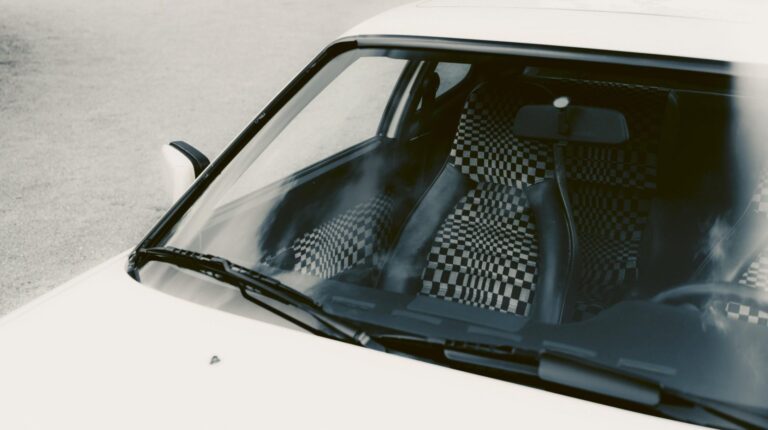
Porsche has reissued many of its iconic fabric patterns – including pasha, tartan and Pepita – which will enable the interiors of many historic and more recent sports cars, from the 356 to the 911, to be restored to their original condition.
“By reissuing these fabrics we are closing a gap, because most customers want to restore their historic or more recent classic cars to their original condition as closely as possible,” said Ulrike Lutz, director of Porsche Classic. “It was particularly important to us in this project that we maintain our quality promise with the fabrics. Unfortunately, there are many imitations on the market that are either not at all suitable as seat fabric or lose their appearance after a short time. That’s why we want to offer our customers a tested original alternative again.”
Original quality
Porsche fabrics enable interiors to be restored to original spec, guided by the classic Porsche Technical Certificate.
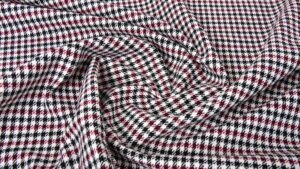
As Porsche Genuine Parts, the vintage textiles match the brand’s high standards for feel, durability and precise, often complex, patterns and colors. “Often, the upholsterer only has to reupholster the driver’s seat. In these cases, our aim is to ensure that it continues to match the front passenger seat, which will usually still have its original covering,” explained product manager Lukas Werginz. In addition, the newly issued fabrics undergo a series of tests, for example, for fire resistance, light and color fastness and abrasion resistance. This makes them ideal for a wide range of applications in vehicle interiors, such as seat covers or side panels. They are available in 1.5m x 2m sizes.
The company archives and beyond
The main source of information for these editions was the company archive. For illustrative purposes, Porsche also acquired rare stock items: in the USA, for example, the experts found an untouched 911 seat. Upholstered in green tartan in 1975, this seat never found its way into a Porsche. “Stored in a light-proof cupboard, and therefore perfectly preserved, this new-old-stock item was gold dust for us,” recalled Werginz.
Pepita, pasha and tartan
From 1963, pepita was an optional seat pattern for the Porsche 356 and later the 911 F, featuring checks linked by diagonal stripes, named after Spanish dancer Pepita de Oliva and popularized by Christian Dior in 1947.
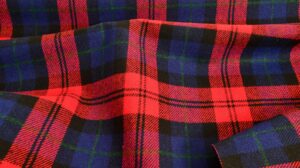
Tartan fabrics, symbolizing tradition and craftsmanship, were offered by Porsche in 1974 for the 911 Turbo and in 1976 for the 911, featuring woven check patterns; notable examples include the 1973 911 RSR Turbo study in Black Watch tartan and Louise Piëch’s 1974 911 Turbo No. 1 with McLaughlan tartan seat centers.
Inspired by checkered flags, the Pasha pattern debuted in a 1977 Porsche 928 and was later offered in the 911, 924 and 944, becoming a signature interior design named to evoke Ottoman sultans on luxurious cushions.
Over 50 years ago, Anatole Lapine and Vlasta Hatter designed the pattern that was inspired by Erich Strenger’s poster, using rectangles to convey Porsche’s dynamism and elegance. The material returns in the new 911 Spirit 70.
In related news, Modern surface finishing trends enhance aesthetics and durability