

Close Menu
Automotive Interiors World
  • News
    • A-C
      • 3D Printing
      • ADAS
      • Aftermarket
      • Appointments, Partnerships, Investments & Acquisitions
      • Augmented Reality
      • Automotive Interiors Expo
      • Autonomous
      • Computing
      • Concepts
      • Connectivity
    • D-L
      • Dash
      • Displays
      • EV
      • Graphics & Printing
      • Haptics
      • HMI
      • HVAC
      • Infotainment
      • Lighting
      • Luxury
    • M-S
      • Materials
      • Microprocessors
      • NVH & BSR
      • Personal Assistants
      • Safety
      • Seating
      • Sensors
      • Simulation
      • Sound System
    • S-V
      • Sport
      • Surfaces & Decoration
      • Sustainability
      • Testing
      • Trim
      • Virtual Reality
  • Features
  • Online Magazines
    • May 2020
    • October 2019
    • May 2019
    • October 2018
    • May 2018
    • Subscribe Free!
  • Opinion
  • Videos
  • Supplier Spotlight
LinkedIn
  • Sign-up for Free Weekly E-Newsletter
  • Meet the Editors
  • Contact Us
  • Media Pack
LinkedIn
Subscribe
Automotive Interiors World
  • News
      • 3D Printing
      • ADAS
      • Aftermarket
      • Appointments, Partnerships, Investments & Acquisitions
      • Augmented Reality
      • Automotive Interiors Expo
      • Autonomous
      • Computing
      • Concepts
      • Connectivity
      • Dash
      • Displays
      • EV
      • Graphics & Printing
      • Haptics
      • HMI
      • HVAC
      • Infotainment
      • Lighting
      • Luxury
      • Materials
      • Microprocessors
      • NVH & BSR
      • Personal Assistants
      • Safety
      • Seating
      • Sensors
      • Simulation
      • Sound System
      • Sport
      • Surfaces & Decoration
      • Sustainability
      • Testing
      • Trim
      • Virtual Reality
  • Features
  • Online Magazines
    1. May 2020
    2. October 2019
    3. May 2019
    4. October 2018
    5. May 2018
    6. Subscribe Free!
    Featured
    April 3, 2020

    In this Issue – May 2020

    By Helen NormanApril 3, 2020
    Recent

    In this Issue – May 2020

    April 3, 2020

    In this Issue – October 2019

    September 19, 2019

    In this Issue – May 2019

    April 30, 2019
  • Opinion
  • Videos
  • Supplier Spotlight
  • Events
LinkedIn
Subscribe
Automotive Interiors World
Safety

Volvo introduces world-first multi-adaptive safety belt

Zahra AwanBy Zahra AwanJune 11, 20253 Mins Read
Share LinkedIn Twitter Facebook Email
Volvo's first multi-adaptive safety belt, displayed in a diagram that shows it broken down into its constituent parts.

Volvo Cars has unveiled a multi-adaptive safety belt, which has been engineered to adapt to individual’s profiles, such as their height, weight, body shape and road situation.

Debuting in the upcoming fully electric Volvo EX60 in 2026, the new safety belt is designed to better protect people by adapting to traffic variations and the person wearing it, using real-time data from the car’s advanced sensors.

The multi-adaptive safety belt uses data input from interior and exterior sensors to customize protection, adapting the setting based on the situation and individual’s profiles, such as their height, weight, body shape and seating position. For example, a larger occupant in a serious crash will receive a higher belt load setting to help reduce the risk of head injury, while a smaller occupant in a milder crash will receive a lower belt load setting to reduce the risk of rib fractures. This is achieved by significantly increasing the number of load-limiting profile variations, which manage the force applied to the occupants in the event of an accident.

“The world first multi-adaptive safety belt is another milestone for automotive safety and a great example of how we leverage real-time data with the ambition to help save millions of more lives,” said Åsa Haglund, head of Volvo Cars Safety Centre. “This marks a major upgrade to the modern three-point safety belt, a Volvo invention introduced in 1959, estimated to have saved over a million lives.”

Leveraging data to improve safety

With five decades of safety research and a database of over 80,000 occupants involved in real-life accidents, Volvo Cars has built a wealth of safety knowledge and experience that has informed its technology development and products.

Modern safety belts use load limiters to control how much force the safety belt applies on the human body during a crash. The multi-adaptive safety belt expands the load-limiting profiles from three to 11 and increases the possible number of settings, enabling it to optimize performance for each situation and individual.

Volvo’s safety belt can use data from different sensors, including exterior, interior and crash sensors. The car’s system then analyzes the unique characteristics of a crash, such as direction, speed and passenger posture, and shares that information with the safety belt. Based on this data, the system selects the most appropriate setting.

Over-the-air software updates

The multi-adaptive safety belt is designed to be improved via over-the-air software updates. As Volvo Cars gathers more data and insights, the car can improve its understanding of the occupants, new scenarios and response strategies.

In related news, Ford has launched the SupportBelt, a soft, foam accessory that attaches to a car seatbelt to relieve pressure on the chest. Read the full story here
Share. LinkedIn Twitter Facebook Email
Previous ArticleSiemens adds Arm Zena Compute Subsystems support to Pave360
Next Article Stradvision collaborates with Arm to accelerate the future AI-defined vehicle development

Read Similar Stories

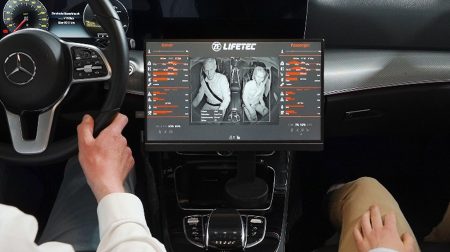
a ZF Lifetec solution displayed on a vehicle dashboard screen.
Safety

ZF Lifetech combines occupant sensing with adaptive restraint in integrated safety solution

October 1, 20263 Mins Read
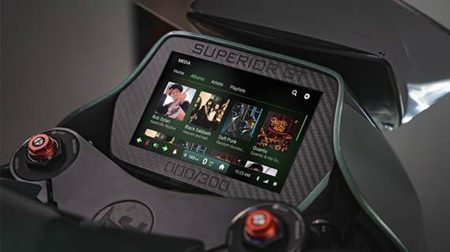
The dashboard screen on a Hush Cycles electric motorcyle, powered by Sparq OS. Visible are navigation and safety feature updates.
Infotainment

Hush Cycles adopts P3 Sparq OS for motorcycle cockpit

September 30, 20262 Mins Read
Yfore debuts integrated occupant and driver monitoring system.
Sensors

Yfore debuts integrated occupant and driver monitoring system

September 3, 20262 Mins Read
Latest News
engineering perspective on the technical, legal and commercial implications of FMVSS 127.

Inside the engineering challenge of FMVSS 127

October 2, 2026
a ZF Lifetec solution displayed on a vehicle dashboard screen.

ZF Lifetech combines occupant sensing with adaptive restraint in integrated safety solution

October 1, 2026
Touchscreen control panel in the dashboard of a classic Porsche vehicle.

Porsche brings PCCM Plus retrofit infotainment system to 911, Boxster and Cayman models

October 1, 2026

Receive breaking stories and features in your inbox each week, for free


Enter your email address:


Supplier Spotlights
  • TG0 Ltd
Getting in Touch
  • Contact Us / Advertise
  • Meet the Editors
  • Media Pack
  • Free Weekly E-Newsletter
Our Social Channels
  • LinkedIn
UKi Media & Events
Related UKi Topics
  • Automotive Testing
  • Automotive Powertrain
  • Autonomous Vehicle
  • Professional Motorsport
  • Tire Technology
  • Media Pack
© 2026 UKi Media & Events a division of UKIP Media & Events Ltd
  • Terms and Conditions
  • Privacy Policy
  • Cookie Policy
  • Notice and Takedown Policy

Type above and press Enter to search. Press Esc to cancel.