


Gallium nitride (GaN) is a semiconductor material that enables significantly greater efficiency and power density than conventional silicon, allowing electronic systems to deliver higher performance from a smaller, lighter package.
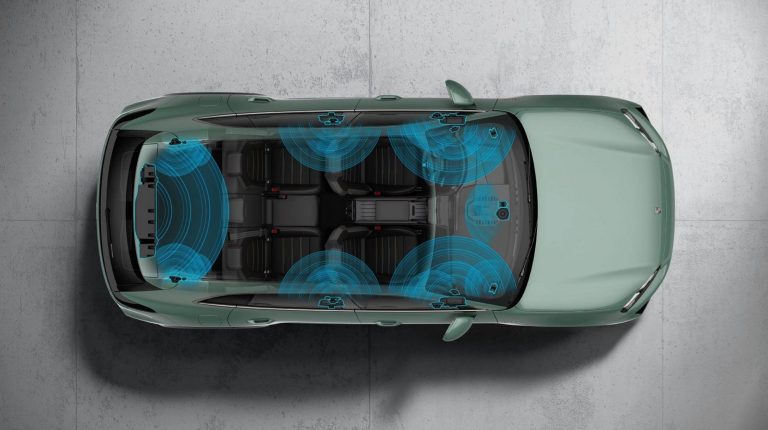
Developed in collaboration with the University of Stuttgart, Porsche has adapted GaN technology for its first automotive application in the Burmester 3D High-End Surround Sound System. A GaN-based high-performance chip handles the voltage conversion required to power the 400-watt subwoofer amplifier. The technology is scheduled to debut in 2027.
“A powerful bass foundation is part of the emotive experience our customers expect from a Porsche. The power reserves of our systems enable confident and dynamic sound reproduction, which is perfectly in keeping with the character of our sports cars,” said Steffen Burosch, audio system innovations, Porsche Development Centre Weissach. “Sound in a Porsche is about pure emotion. By using GaN, we can enhance that experience even further. Our customers will be able to enjoy the outstanding sound quality of the Burmester High-End Sound System while also experiencing state-of-the-art engineering.”
New semiconductor technology for series production
GaN is an innovative semiconductor material that first found wider application in blue light-emitting diodes (LEDs) in the 1990s. Today, GaN chips are used in a wide range of applications, from compact and lightweight USB chargers for smartphones and tablets to satellites in space.
GaN-based semiconductor switches, commonly known as transistors, enable higher switching frequencies and, thanks to their material properties, exhibit significantly lower switching losses than comparable silicon-based transistors. The resulting reduction in heat generation increases the efficiency of voltage conversion while also creating opportunities for more compact and lightweight designs of electronic components such as capacitors and inductors.
The Burmester 3D High-End Surround Sound System uses GaN semiconductors to improve power conversion efficiency compared with conventional silicon devices. Reduced heat generation allows a smaller, lighter heat sink and more compact passive components, while using less aluminum in the amplifier can also reduce its production-related CO2 footprint.

Amplifier with GaN technology
Porsche began exploring GaN technology for sports-car applications in mid-2023. From spring 2024, Porsche’s audio, semiconductor and sustainability teams worked with the University of Stuttgart’s Institute for Robust Power Semiconductor Systems to develop a prototype GaN-based subwoofer amplifier.
Driving GaN innovation
“We focused on the fundamental technical challenges of efficient voltage conversion. In a sports car, efficiency and weight are crucial factors,” commented Dr Lars Heuken, strategic semiconductor management, Porsche. “Working closely with a leading international chip manufacturer and an audio development partner, the team ultimately succeeded in creating a production-ready subwoofer amplifier.”
Dr Heuken continued, “Many fields of application are conceivable in Porsche sports cars and we are investigating them in more detail. For example, the semiconductor can be used for power conversion in high-voltage systems. This makes GaN particularly interesting for the high-voltage systems of electric sports cars, for instance. Quality and tangible customer benefits are at the heart of all our considerations.”
In related news, Ceva and Actions Technology launch Bluetooth HDT audio chips