

As vehicle interiors become an increasingly important part of the mobility experience, OEMs and suppliers are balancing design, performance, sustainability and cost. Zahra Awan speaks with Joanna Giovanoli, senior marketing manager at Dow, about the role of material innovation in addressing these competing requirements
Dow is a materials science company working with OEMs, Tier suppliers and converters across the automotive value chain. Its Dow MobilityScience platform supplies materials for applications including interiors, seating, acoustics, batteries, thermal management and electronics. Its interior materials are used in applications such as instrument panels, door panels, consoles and soft-touch surfaces.
How are changing expectations around vehicle interiors influencing the materials OEMs are choosing, particularly when it comes to balancing premium aesthetics, durability and cost?
Vehicle interiors have become one of the most visible expressions of brand identity. Drivers interact with interior surfaces every day, so expectations around comfort, appearance, durability and overall quality continue to increase.
At the same time, auto makers face significant pressure to manage costs and manufacturing complexity. As a result, we’re seeing growing interest in materials that can deliver a refined appearance and soft-touch experience while helping address practical requirements like durability, processability, weight reduction and low odor performance.
The challenge isn’t choosing between aesthetics and performance. It’s finding materials that help achieve both.
When does a material stop being purely functional and become part of a vehicle’s identity? And how much can the feel of a surface influence our emotional connection with a car?
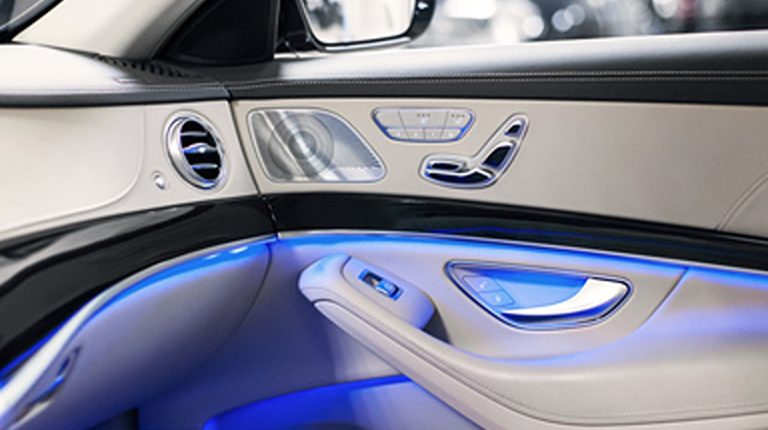
The moment a driver places their hand on a steering wheel, armrest, door panel or console, they’re forming an impression of the vehicle. That experience goes far beyond functionality.
Texture, softness, visual depth and even the way light interacts with a surface contribute to how people perceive quality. These details can influence whether a vehicle feels inviting, sophisticated, sporty or technologically advanced.
In many ways, materials have become part of the storytelling of a vehicle. They’re helping designers create experiences, not just components.
What advances in TPO soft-skin technology are helping manufacturers achieve a more premium look and feel while also addressing requirements such as low VOC emissions and recyclability?
The evolution of polyolefin elastomer technology has opened new opportunities for soft TPO interior skins. Today’s formulations can help deliver increased softness, grain definition and surface aesthetics, durability, broader color ranges and low-gloss appearance that designers often seek in premium interior applications.
At the same time, polyolefin-based soft TPO systems can be formulated without plasticizers, which may help support low VOC and low odor performance. The industry is also exploring approaches that may support material recovery and recycling pathways at end of life where appropriate infrastructure exists.
We’re continuing to see innovation in areas such as high melt strength polyolefins, enhanced heat resistance, improvements in long-term durability, recycled-content approaches and advanced TPO formulations that expand design flexibility while helping manufacturers address evolving performance and sustainability objectives.
How can material innovation contribute to greater manufacturing efficiency, and where do you see the biggest opportunities to reduce cost without compromising interior quality?
One of the biggest opportunities is to simplify. Historically, achieving a premium interior often required multiple materials, multiple processing steps or added complexity throughout the manufacturing chain.
Today, material innovation is helping manufacturers do more with fewer steps. Advances in polymer design can help improve processing consistency, formability and overall production efficiency while still delivering the look and feel consumers expect. These benefits can also be achieved with potential cost advantages compared to traditional artificial and genuine leather solutions.
The most successful projects tend to come from early collaboration between OEMs, converters and material suppliers. When conversations happen early enough, it’s often possible to identify opportunities to optimize cost, performance and manufacturability simultaneously rather than treating them as competing objectives.
EXPLORE: Rethinking occupant safety and restraints for driverless cars