


AIW gets five minutes with Klaus Zyciora, VP of global design at Changan, another of the Chinese OEMs making its foray into the west, to ask what’s the formulae for crafting such elaborate cabins across multiple products in such a short time period
Please tell us about your career background.
I started my career at Volkswagen as an interior designer in 1989. From there, I had a 39-year career at VW. I held various positions from interior designer to exterior, and the last position I held was head of group design for VW. When I left, my phone rang like crazy with calls from various companies. In the end, I gave it a shot with Changan and it’s now been two years since I’ve been living and working in China.
That has been quite an experience, challenging in many dimensions – the amount of projects, the speed of decision making, the agility is pretty breathtaking. As a designer, it’s an awesome place to be when looking at my remaining career time, being able to do everything on fast-forward and working on a lot of cars in a very short amount of time.
What’s the setup of Changan’s design network?
We have the headquarters in Chongqing with approximately 400 to 500 staff in the design center alone. Then we have our newly inaugurated center in Shanghai called Next Lab Digital Research for all disciplines. We have our design center in Turin, Italy with 300 personnel. Then we have our design center in Japan where there is a team of 40-50 with an eye on the Japanese market. Avatr also has a big design center in Munich.
What’s Changan’s design and development philosophy?
We have around 70 to 80 programs happening in parallel at different stages with several new brands creating products to compete on a global scale. We go through all stages [of development] in a very fast manner. Each product from definition to delivery is mainly driven by the design department, collaborating with engineering and manufacturing. In Changan, there is no engineering-led process, it’s a design-led process.
What are Changan’s current priorities in cabin development, including both practical and aspirational technologies that the company has already implemented and those it is actively developing?
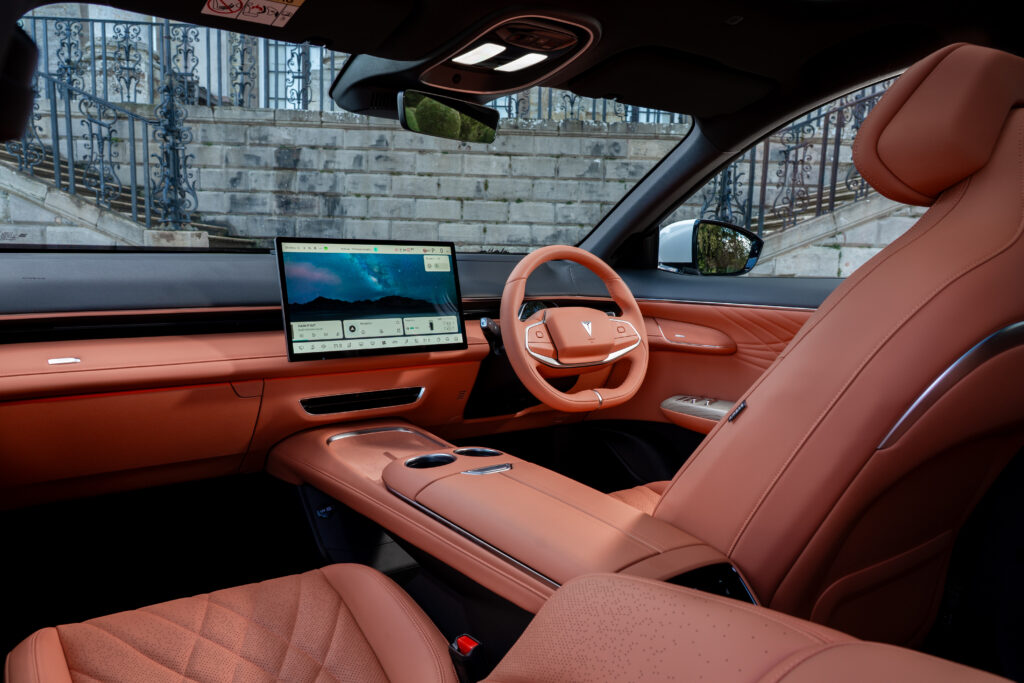
You will see in many Changan products, the applied materials are in a totally different league than what you have in Europe – [of a] much higher perceived quality, [there is] more craftsmanship, a lot of metalized or metal elements, leather and PU materials that you only find in premium or luxury vehicles in Europe. In China, [these materials are] more affordable.
When I entered the industry, you had a radio and buttons. Then there was the rise of the screen – a digital asset but with buttons around it. Then the rise of the smart phone and computing power – you can integrate many more functions if you get rid of the buttons. Then people wanted buttons back because they don’t want to go through 10 menus, that’s too complicated. That’s where it’s self-healing – the pendulum swings into the middle where you have the right amount of buttons and the best screen solutions – it’s the come-back of common sense.
Think speaker systems, tiltable screens, a retractable co-driver screen, lounge seating, retractable rear seating with massage functionality and luxury gadgets – we’re aiming to bring this to Europe. You could have rear seats that you can lie back in and sleep, with heating and cooling functionality, and a zero-gravity seat for the co-driver, plus AI and HUD technology – that’s the lower-class product. Going forward, we’re going to build on that.
In related news, Xpeng’s global update includes human-machine co-driving and pet mode